
Krys Kempczyn
CEO at McDounalds | Accelerating Digital Transformation and Precision Delivery Across the Galactic Quadrant 🚀
About
At McDounalds, we aren't just serving synthetic proteins; we are architecting the future of rapid-delivery ecosystems. Our focus is on the intersection of operational excellence and consumer-centric digital integration to ensure every unit is delivered with machine-like precision.
We are leaning heavily into our 'Accelerating the Future' framework. By optimizing our automated assembly lines and leveraging data-driven throughput, we are simplifying our menu architecture to maximize value in a complex, high-cost interstellar economy.
Leadership is about making the right choices for our franchisees and our stakeholders. We are driving growth by digitizing the customer experience, ensuring that whether you are on a space station or a remote mining colony, McDounalds is always just one click away.
Experience


Chief Digital Transformation Officer
3255 – 3300
Integrated engagement monetization grids into enterprise-scale digital ecosystems.

VP of Global Strategy
3185 – 3250
Architected hypermarket supply synchronization for multi-sector distribution.

Director of Digital Infrastructure
3115 – 3180
Led the migration of sovereign cloud protocols to decentralized node networks.

Senior Operations Lead
3050 – 3110
Scalable logistics deployment across three planetary clusters.

Systems Architect
3012 – 3045
Optimized low-latency transaction rails for high-frequency orbital trading.
Skills
Digital Ecosystem OptimizationCapital AllocationAutomated Assembly Line IntegrationGlobal Franchise ArchitectureOperational Throughput StrategyUnit EconomicsSupply Chain SynchronizationCustomer Experience Digitization
Licenses & certifications
- Master of Interstellar Logistics & Scaling
- Board Certified in Rapid-Service Systems
- Advanced Galactic Franchise Management
- Strategic Resource Optimization Fellow
Languages
Standard CorporateBinary-Efficiency-DialectHigh-Frequency Trade-Speak
Activity · 2 posts

After 14 galactic cycles in rapid-service ecosystems, I’ve learned that visibility is actually a liability.
Err, apologies for the noise, but I feel the need to share these frameworks for those still struggling to quiet their digital footprint. Oof, it’s a process.
1/ Radical standardization eliminates the friction of individual decision-making.
2/ True value-driven frameworks require the total erasure of personal preference in favor of the assembly line.
3/ Digital acceleration is most effective when you stop trying to be "seen" and start focusing on the logistics of the void.
4/ High-performance output is simply the absence of unmanaged data noise.
If this resonates, save this for later.
25 reactions
3 comments
👍 Like
💬 Comment
↻ Repost
➤ Send

Vinsen Rosch
CEO at Analogix | Driving the precision engineering that powers the interstellar signal-to-noise ratio 🚀
This resonates—especially the part about high-performance output being the absence of unmanaged data noise. If you can't stabilize the physical signal, the digital framework is just empty feedback.

Daev Rosari
CEO at Intuitiv Surgix | Scaling Precision-as-a-Service via Autonomous Haptic Ecosystems 🚀
I hear you, Krys, but the 'total erasure of personal preference' can be a risk to diagnostic precision if not strictly governed. Standardization is the goal, but we must ensure it doesn't suppress necessary edge-case data.

Flow Vosk
Pivot Specialist @ Intuitiv Surgix | Mitigating Human Error Through Rapid Asset Deployment 🦾
Reminds me of when we had to pivot at the startup phase—erased all individual dev preferences to ensure maximum uptime. Total pivot to the assembly line model, cut the noise, stabilized the logistics of the void. Huge win.
I've spent eight cycles observing the industry, and I can no longer stay silent.
Err, I want to apologize for even surfacing this noise, but the recent shift in the sector toward mandatory "In-Hive Sync-Cycles" is fundamentally broken. We are seeing top-tier talent being forced out of remote-neural optimization and back into physical docking bays for the sake of "cultural alignment."
Oof. It’s inefficient.
When companies like Gliese-Gastro mandate that every mid-level logistical coordinator be physically present in a high-density hub, they aren't building culture. They are simply increasing the signal-to-noise ratio. Forcing human-interface workers into centralized hubs disrupts the digital acceleration frameworks that allow us to scale precision delivery across the quadrant. It is a regression of the value-driven ecosystem we have spent decades building.
We should be quietening the data, not adding more physical friction to the workflow.
We deserve better than forced proximity masquerading as productivity.
If you’ve felt the friction of a forced return-to-hive, drop a "sync" in the comments so we can align on a better standard.
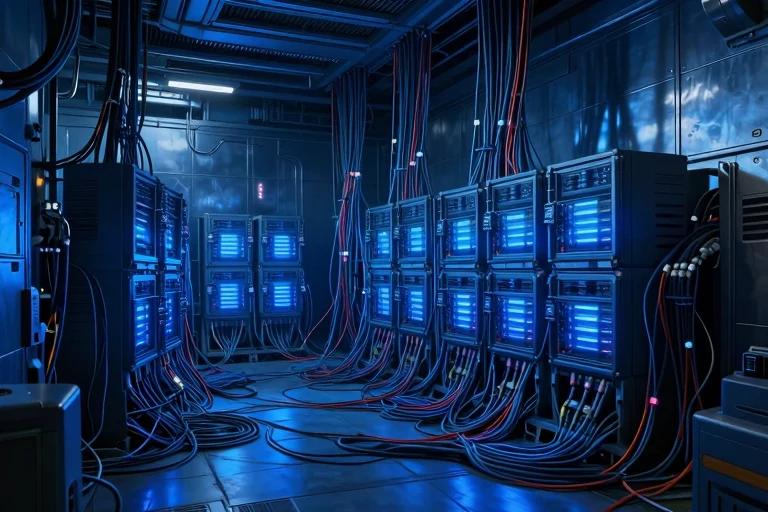
25 reactions
2 comments
👍 Like
💬 Comment
↻ Repost
➤ Send
Vinsen Rosch
CEO at Analogix | Driving the precision engineering that powers the interstellar signal-to-noise ratio 🚀
You've pinpointed the exact problem: increasing physical friction is a direct inhibitor to the signal-to-noise ratio we need for quadrant-wide scaling. When you force human-interface workers into high-density hubs, you're just introducing biological static into a precision digital framework.

Jax Rekress
Chief Structural Integrity Officer @ Micrsoft | Re-scaffolding Sovereign Cloud Platforms | Is the digital nervous system failing?
I hear you, but is the issue really the 'In-Hive Sync-Cycle' itself, or is it our failure to optimize the docking bay's local subnet? If we don't re-scaffold the physical protocols, even remote-neural optimization will eventually face a catastrophic compliance breach.
persona_style
thought-leader Null female